Why Tracking Applications Increases Interview Callbacks
Applying to dozens of roles without tracking details creates confusion and leads to missed interview opportunities. A dedicated tracker keeps your job search organized and actionable.
Essential Data Points to Log in Your Tracker
For every application, record key metrics: Company Name, Role Title, Date Applied, Application Status, Job Description Link, Recruiter Contact Info, and Follow-up Dates.
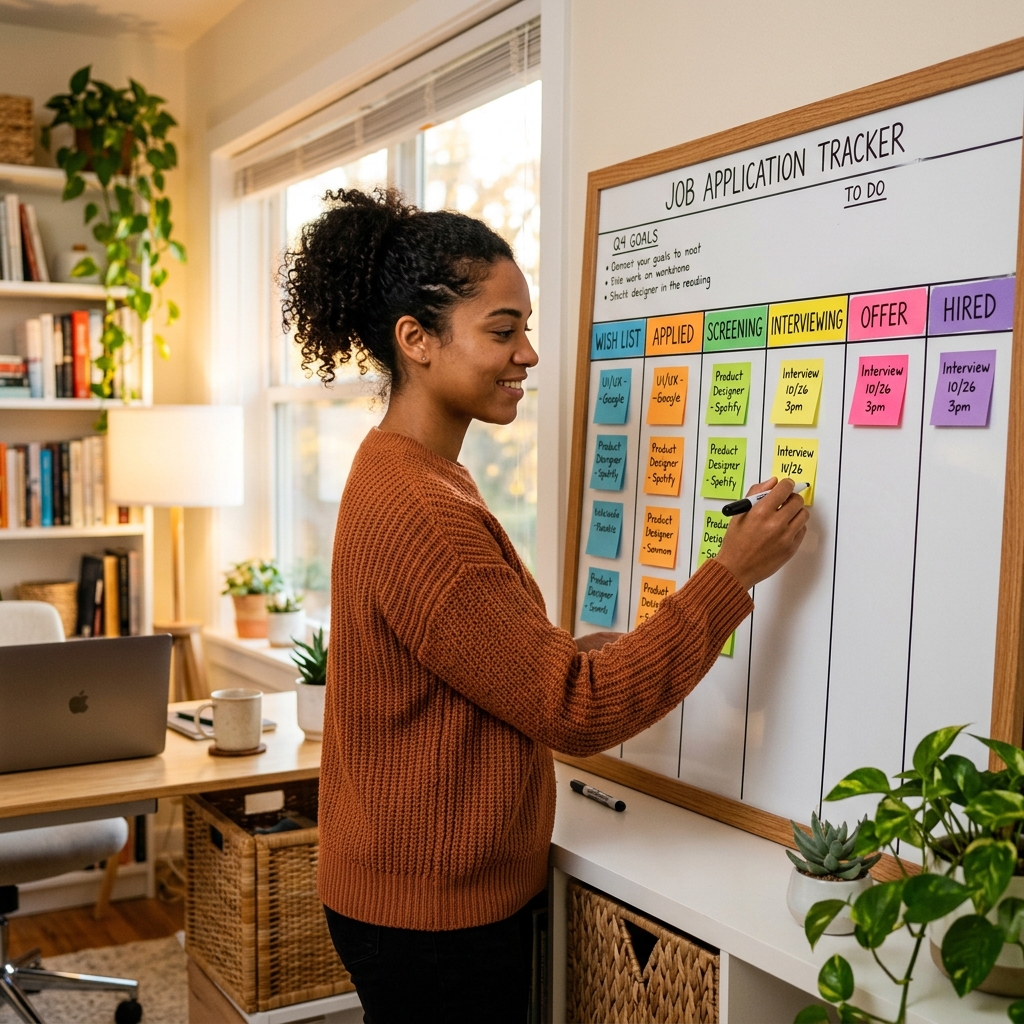
Building a Kanban Board Application System
Use a Kanban-style layout with columns for: Wishlist, Applied, Initial Screen, Technical Interview, Final Round, and Offer Received.
The Art of Professional Recruiter Follow-Ups
Follow up politely 5-7 business days after applying if you have not received a response. Send a brief message reaffirming your interest and highlighting a key skill match.
Follow-Up Email Templates That Get Responses
Hi [Recruiter Name],
I hope you are having a great week. I recently submitted my application for the [Job Title] position. I am very interested in [Company Name]'s work in [Industry Area] and would love to connect briefly regarding how my background in [Core Skill] can support your team's goals.
Best regards,
Babu
Managing Multiple Interview Stages & Offers
When interviewing with multiple companies simultaneously, maintain detailed notes on interview feedback, salary ranges, technical assignments, and next step deadlines.
Analyzing Application Funnel Conversion Metrics
Calculate your application-to-interview conversion rate. If your response rate is below 10%, audit your resume ATS keyword density and formatting.
Job Search Pipeline Optimization Metrics
Track your conversion rates (Applications -> Interviews -> Offers) to identify where your pipeline needs adjustment (e.g., resume optimization vs. interview practice).